A straddle in poker is when you make a voluntary blind bet before the cards are dealt, usually double the size of the big blind. This extra bet happens after the small and big blinds but before anyone sees their cards. When you place a straddle, you gain the right to act last before the flop, giving you a positional advantage in that betting round.
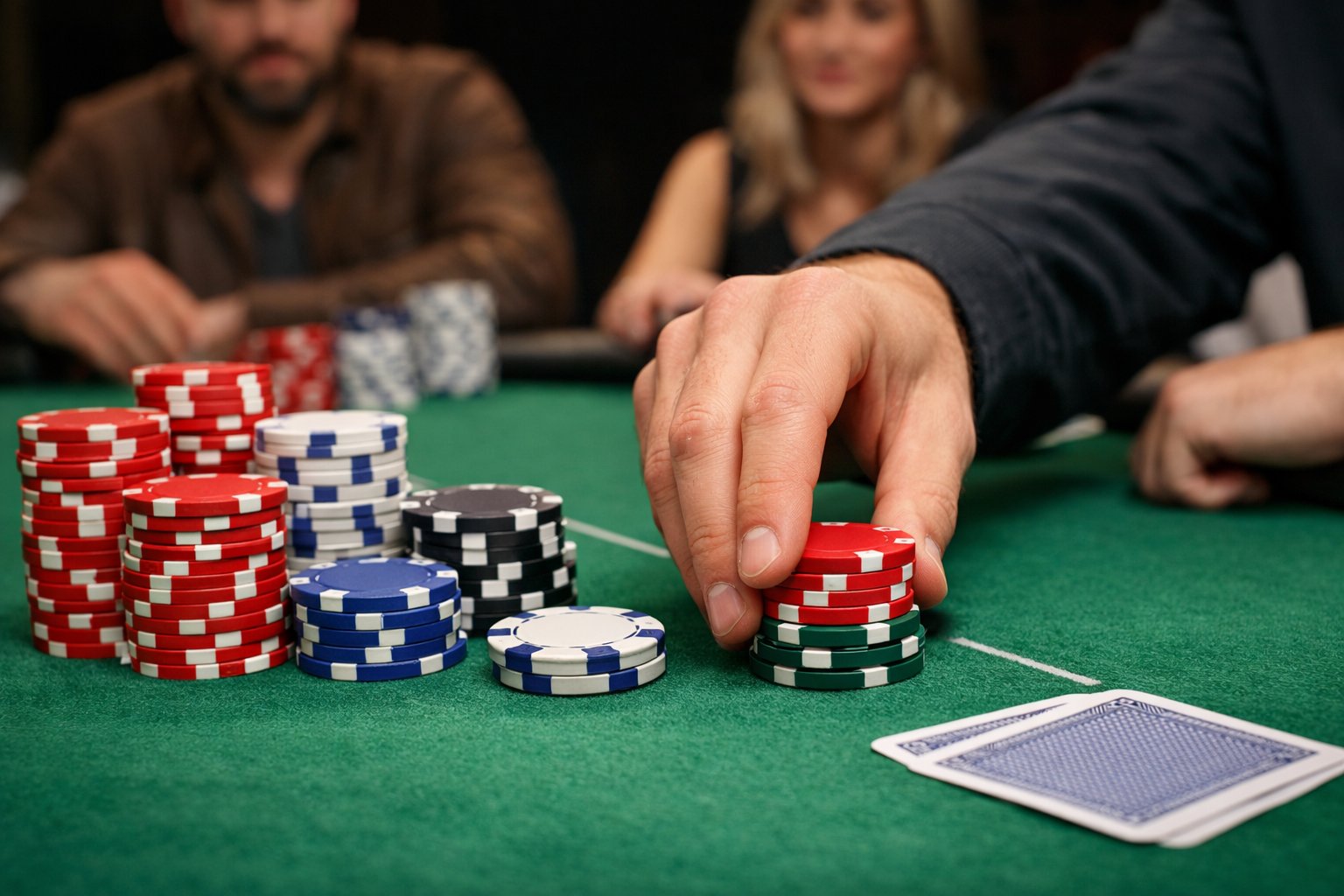
Most poker rooms allow straddles in cash games, though the rules can vary. The most common type is called a live straddle, where the player sitting directly to the left of the big blind places the bet. Some games also let you straddle from the button or other positions.
Understanding when and how to use a straddle can change the way you play poker. It affects the stakes of the game, your position at the table, and the strategy you need to win. This guide will help you learn what a straddle is and how it impacts your decisions during a game.
Understanding the Straddle in Poker
A straddle is a voluntary blind bet that increases the stakes before cards are dealt. It changes the betting structure and creates larger pots, which affects how everyone at the table should play their hands.
Definition of a Straddle
A straddle is an optional bet you can make before receiving your cards. It costs twice the big blind and acts as a third blind in the betting round.
When you place a straddle, you put in the chips before anyone looks at their cards. This bet gives you the right to act last during the first betting round. Most poker rooms allow the player sitting to the left of the big blind to straddle, though some games permit straddles from other positions.
The straddle functions as a live bet. This means you can raise when the action comes back to you, even if no one else has raised. You’re not locked into just calling or folding like the regular blinds would be after everyone else acts.
How a Straddle Works
When you post a straddle, you double the amount of the big blind before the dealer gives out cards. If the big blind is $5, your straddle would be $10.
The presence of a straddle changes who acts first. Instead of the player to the left of the big blind starting the action, the player to your left begins. Everyone must now call $10, raise, or fold to stay in the hand.
Your straddle gives you a key advantage. You get to act last before the flop, which is normally the big blind’s position. When the betting comes around to you, you can choose to raise, call any raises, or fold based on what others have done.
Types of Straddles in Cash Games
UTG Straddle is the most common type. You place this from the under-the-gun position, which is directly to the left of the big blind. This is the standard straddle that most poker rooms allow.
Button Straddle lets you straddle from the dealer button. You still post double the big blind, but you maintain your position advantage throughout the hand. Not all card rooms permit this option.
Mississippi Straddle allows any player at the table to straddle regardless of position. The straddler still acts last before the flop. This creates more action but can make the game chaotic.
Multiple Straddles occur when more than one player wants to straddle. Each additional straddle must be double the previous one. Some games allow three or four straddles, which creates massive pots before anyone sees their cards.
Straddle Rules in Different Poker Variants
Texas Hold’em cash games are where you’ll find straddles most often. The rules stay consistent across most poker rooms, but you should always ask about specific house rules before playing.
Pot Limit Omaha also allows straddles with the same basic rules. The betting structure adjusts to accommodate the larger starting pot. Some PLO games get very large when straddles are involved because the pot grows quickly.
No Limit Hold’em tournaments rarely allow straddles. Tournament directors typically ban them because they can create unfair advantages and complicate the blind structure.
Live cash games have different straddle policies depending on the casino or card room. Some require all players to agree before allowing straddles. Others let you straddle freely whenever you want.
Implications of Using a Straddle
A straddle changes the game structure and affects both your strategy and the behavior of other players. It increases the stakes, creates different playing conditions, and shifts how the entire table approaches each hand.
Strategic Advantages and Disadvantages
When you straddle, you get the last action before the flop, which gives you more information about other players’ hands. This positional advantage lets you make better decisions after seeing how everyone else acts.
However, straddling forces you to put money in the pot with random cards. You’re paying double the big blind without knowing if you’ll get strong or weak hole cards. This creates a mathematical disadvantage over time.
Key strategic considerations:
- You pay more to see fewer flops in position
- You increase variance in your results
- You build larger pots with unknown holdings
- You give up money on weak hands you would have folded
Straddling works against solid long-term poker strategy. The positional benefit rarely makes up for the cost of posting blind bets with any two cards. Most serious players avoid regular straddling because it decreases their expected profit.
Effect on Table Dynamics
A straddle makes the game bigger and more action-oriented. Other players often loosen up their starting hand requirements because the pot is already larger. This creates more pre-flop raising and bigger pots overall.
Your straddle can change how opponents view you. Some players see straddlers as loose or recreational, which might cause them to bluff more or call lighter against you. Others respect the aggression and play more carefully.
The entire table usually plays more hands when someone straddles. The increased pot size makes marginal hands more attractive to play. This leads to more multi-way pots and less predictable action patterns.
Common Scenarios for Straddling
Players most often straddle in loose, friendly cash games where building bigger pots is socially expected. Private games and certain casino cardrooms allow and encourage this practice to increase action.
You might consider straddling when you want to fit in at a recreational table. Some games have an informal rule where everyone takes turns straddling. Refusing to straddle in these games can mark you as too serious or unwelcome.
Button straddles appear in specific venues that permit them. The under-the-gun straddle remains the most common type across different poker rooms. Mississippi straddles, where any player can straddle from any position, create the most chaotic game conditions but only exist in certain cardrooms.