Omaha poker is a community card game where you receive four face-down cards instead of two like in Texas Hold’em. To play Omaha poker, you must use exactly two of your four hole cards combined with exactly three of the five community cards to make your best five-card hand. This rule makes Omaha different from other poker games and creates more action at the table.
The game follows a similar betting structure to Texas Hold’em with four rounds of betting. You’ll see a flop of three community cards, then a turn card, and finally a river card. Players bet after each round, and the person with the best hand at showdown wins the pot.
Learning Omaha takes practice because you need to think about more card combinations than other poker games. Understanding the basic rules and hand rankings will help you get started. Once you know which hands are strong and how the betting works, you can start using strategy to improve your results.
Omaha Poker Rules and Gameplay
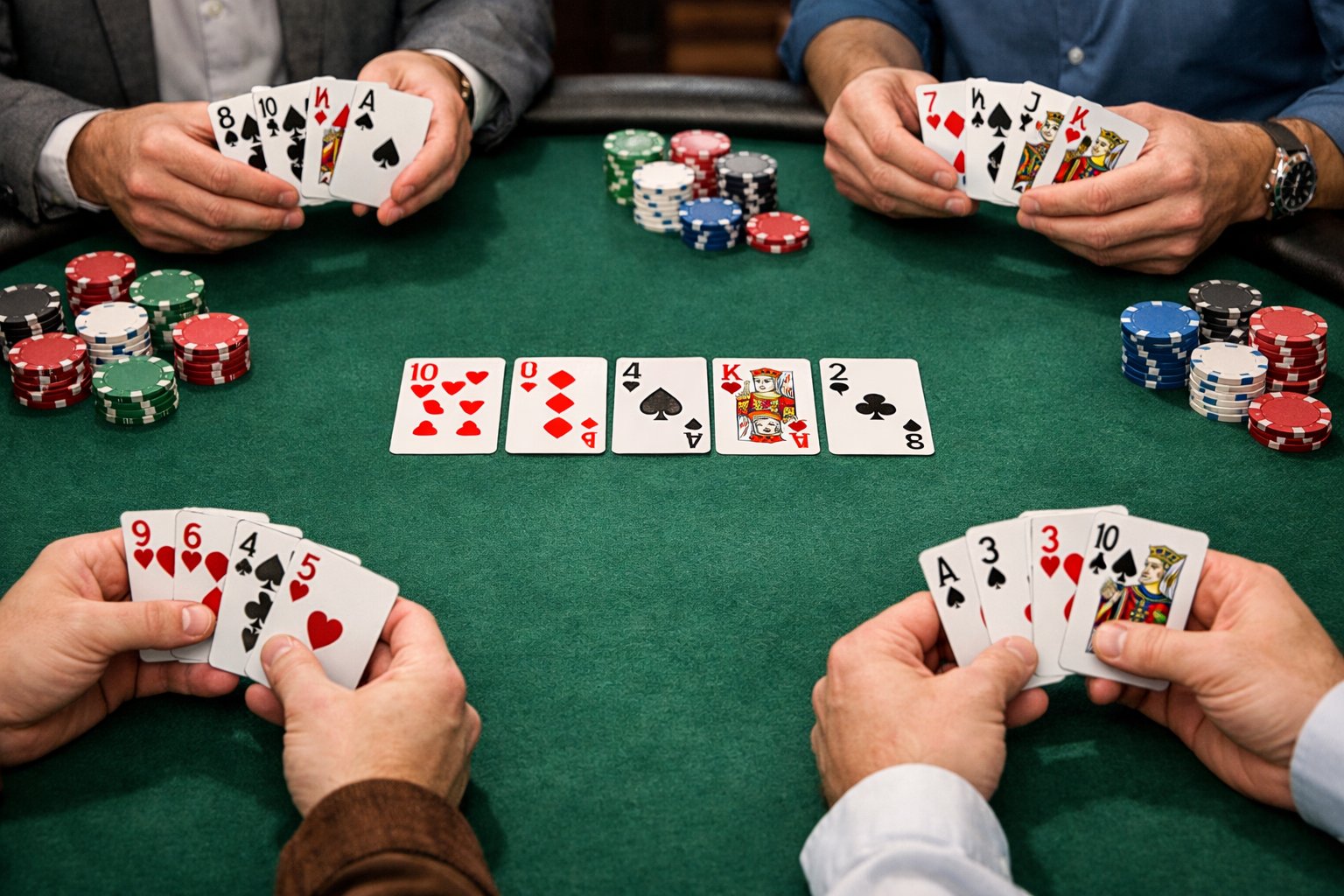
Omaha poker deals each player four hole cards instead of two, and you must use exactly two of them combined with exactly three community cards to make your final hand. The game follows a structured betting format with four distinct rounds, and your starting hand selection matters more than in Texas Hold’em.
Basic Rules of Omaha Poker
You receive four private cards face down at the start of each hand. Five community cards appear on the board throughout the hand.
The key rule that sets Omaha apart: You must use exactly two cards from your hand and exactly three cards from the board. You cannot use three or four cards from your hand, even if it would make a better hand.
The dealer position rotates clockwise after each hand. Two players post forced bets called the small blind and big blind before cards are dealt.
Your goal is to make the best five-card poker hand possible using the mandatory 2-from-hand and 3-from-board combination. Hand rankings follow standard poker rules, with royal flush at the top and high card at the bottom.
Betting Structure and Rounds
Pot Limit Omaha (PLO) is the most common format. You can bet any amount up to the current pot size.
The four betting rounds are:
- Pre-flop – After receiving your four hole cards
- Flop – After three community cards are dealt
- Turn – After the fourth community card appears
- River – After the fifth and final community card is revealed
Action starts with the player left of the big blind pre-flop. On all other rounds, the first active player left of the dealer button acts first.
You can fold, call, or raise during your turn. In pot limit games, calculate the maximum raise by adding the current bet to the pot total.
The Importance of Starting Hands
Your four-card starting hand creates six possible two-card combinations. Strong hands have cards that work together in multiple ways.
Premium starting hands include high pairs with suited cards, such as A-A-K-Q with suits that coordinate. Double-suited hands (two cards of one suit, two of another) perform better than rainbow hands.
Avoid hands with four unconnected cards or “dangler” cards that don’t coordinate with the others. A hand like A-A-7-2 has only one strong two-card combination, making it weaker than it appears.
Connected cards in the 9-through-Ace range give you more straight possibilities. Pairs below tens lose value quickly because you need to improve them to win at showdown.
Winning Strategies for Omaha Poker
Success in Omaha requires careful hand selection, strong board reading skills, and smart positional awareness. You need to avoid common beginner errors that can quickly drain your stack.
Reading the Board and Opponents
Board reading in Omaha is more complex than Hold’em because you must use exactly two cards from your hand and three from the board. You need to constantly evaluate what the current nuts are and how the board texture affects possible hands.
Pay attention to how many cards can complete straights and flushes. A board with three cards of the same suit means someone likely has a flush. Connected boards create multiple straight possibilities that you must account for.
Watch your opponents’ betting patterns across multiple hands. Someone who bets aggressively on paired boards likely has full houses or better. Players who check-raise on draw-heavy boards often have strong made hands or powerful combo draws.
You should consider how many outs your opponents might have. In Omaha, players frequently have 13-20 outs even when behind, which makes draws much more valuable than in Hold’em.
Positional Play in Omaha
Your position at the table directly impacts which hands you should play and how aggressively you should bet. You gain more information when acting last, allowing you to make better decisions with marginal hands.
Play tighter from early position by folding hands that lack coordination. From late position, you can play more speculative hands like suited connectors or double-suited cards because you see how others act first.
Position-Based Hand Requirements:
- Early Position: Premium hands with high cards and good coordination
- Middle Position: Strong connected hands with flush potential
- Late Position: Wider range including medium pairs and suited hands
Use your position to control pot size. Check behind with medium-strength hands in position to get to showdown cheaply. Bet your strong hands and draws more aggressively when you have position advantage.
Common Mistakes to Avoid
New Omaha players often overvalue hands that would be strong in Hold’em. A single pair, even aces, rarely wins at showdown in Omaha. You need to fold these hands when facing significant action.
Don’t play hands with danglers—cards that don’t connect with your other three cards. Four connected cards work together to make multiple strong combinations. Random high cards waste your hand’s potential.
Avoid chasing weak draws without proper odds. You need to calculate your true outs carefully because some cards that appear helpful actually complete better hands for opponents.
Critical Errors to Stop:
- Playing too many hands preflop
- Overvaluing top pair or overpairs
- Ignoring pot odds and equity calculations
- Failing to fold when the board clearly beats your hand