Texas Hold’em is the most popular poker game in the world, played in casinos, home games, and online tables everywhere. The game uses a standard 52-card deck where each player receives two private cards and combines them with five community cards to make the best possible five-card poker hand. You win by either having the best hand at showdown or by making all other players fold before then.
Learning Texas Hold’em is easier than you might think. The basic rules are simple enough to understand in minutes, though mastering the strategy takes much longer. Whether you want to play with friends or compete in tournaments, knowing how the game works is your first step.
This guide covers everything you need to start playing Texas Hold’em. You’ll learn the exact rules, how each round works, and what hands beat what. By the end, you’ll be ready to sit down at your first game with confidence.
Texas Hold’em Poker Rules
Texas Hold’em follows a structured set of rules that govern gameplay, player positions, and forced bets. These rules create the framework for every hand you play.
Understanding the Objective
Your goal in Texas Hold’em is to win chips by either having the best five-card poker hand at showdown or making all other players fold before showdown. You create your best hand using any combination of your two private cards (hole cards) and the five community cards dealt face-up on the table.
Each hand ends when either all players but one have folded, or remaining players show their cards to determine the winner. You don’t need to use both of your hole cards. You can use two hole cards, one hole card, or even no hole cards if the five community cards make your best hand.
The player with the highest-ranking hand wins the pot, which contains all the chips bet during that hand. If two or more players have identical hands, they split the pot equally.
Positions at the Table
Your position at the table determines when you act during each betting round. The dealer button, a small disc that moves clockwise after each hand, marks the dealer position.
Early positions act first and include the small blind, big blind, and the player to the left of the big blind. Middle positions come next, followed by late positions, which include the cutoff (one seat right of the button) and the button itself.
Position matters because players in late position see what earlier players do before making their own decisions. This gives you more information to work with. The button is the most advantageous position since you act last on all betting rounds except the first.
The Blinds and Button
The blinds are forced bets that two players must post before cards are dealt. The player immediately left of the button posts the small blind, and the next player posts the big blind.
The big blind is typically twice the small blind amount. In a $1/$2 game, the small blind is $1 and the big blind is $2. These forced bets create action and give players something to compete for in every hand.
The button moves one seat clockwise after each hand, which means everyone at the table pays the blinds in turn. You cannot skip paying the blinds if you want to play hands at that table.
How to Play Texas Hold’em
Texas Hold’em follows a structured pattern of dealing cards and placing bets across multiple rounds. You combine your private cards with shared community cards to form the best possible five-card hand.
Dealing and Betting Rounds
The game starts with two players posting forced bets called the small blind and big blind. These bets rotate clockwise after each hand. You receive two private cards face down, known as hole cards.
The first betting round begins with the player left of the big blind. You can fold, call the big blind amount, or raise. Each player acts in turn moving clockwise around the table.
After this round completes, the dealer places three community cards face up on the table. This is called the flop. Another betting round starts with the first active player left of the dealer button.
A fourth community card called the turn gets dealt face up. You go through another betting round. Then a fifth and final community card called the river appears, followed by the last betting round.
How to Make a Hand
You create your best five-card poker hand using any combination of your two hole cards and the five community cards. You can use both hole cards, one hole card, or neither of your hole cards.
The hand rankings from highest to lowest are:
- Royal Flush: A, K, Q, J, 10 of the same suit
- Straight Flush: Five consecutive cards of the same suit
- Four of a Kind: Four cards of the same rank
- Full House: Three of a kind plus a pair
- Flush: Five cards of the same suit
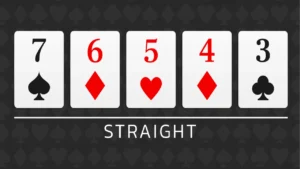
- Straight: Five consecutive cards of mixed suits
- Three of a Kind: Three cards of the same rank
- Two Pair: Two different pairs
- One Pair: Two cards of the same rank
- High Card: No matching cards
Community Cards Explained
The five community cards belong to everyone at the table. They appear in three stages during the hand. The flop reveals three cards at once, giving you significant information about possible hands.
The turn adds one more card. This fourth community card often changes the strength of hands and creates new drawing possibilities.
The river is the final community card. At this point, all possible hands are complete. You know exactly what you have and can make informed decisions about betting or folding.
Winning the Pot
You win the pot by having the best hand at showdown or by making all other players fold. If you bet or raise and everyone folds, you take the pot immediately without showing your cards.
When two or more players reach showdown, you compare hands using the standard rankings. The highest-ranked hand wins all the chips in the pot. If you have identical hands with another player, you split the pot evenly.
You must use exactly five cards to make your final hand. The remaining cards have no value in determining the winner.